

Why the “Made in Italy” Label Matters
In today’s world, “Made in Italy” is everywhere.
It appears on labels, in storefronts, and across global marketplaces. But as the phrase becomes more common, its meaning has become less clear. Not every product that carries the label reflects the tradition, craftsmanship, and integrity that it was originally meant to represent.
To understand why “Made in Italy” still matters, you have to look beyond the label itself—and return to where it all began.
A Legacy That Runs Deeper Than a Label
The phrase “Made in Italy” became a globally recognized mark of quality in the 1980s, but its roots stretch back much further—especially in cities like Florence, where craftsmanship has been refined over centuries.
Florentine leather production dates back to the 1200s, when artisans began developing techniques that prioritized precision, durability, and beauty. These methods were not created for mass production. They were developed slowly, over generations, by people who understood that quality takes time.
That legacy still exists today—not as a concept, but as a way of working.
The Shift Toward Fast Fashion
Modern fashion has changed the way products are made and consumed.
The rise of fast fashion has made it possible to replicate trends quickly and affordably. There is a place for accessibility in fashion, but the model comes with consequences. Products are designed to be temporary—quick to produce, quick to sell, and just as quick to fall apart or fall out of style.
Behind the scenes, this often leads to overproduction, reduced material quality, and increased environmental impact. It also places pressure on craftsmanship, replacing skill with speed.
The result is a cycle of consumption rather than ownership.
The Return to Something Better
In contrast, there is a growing movement toward something more intentional—often referred to as slow fashion.
Slow fashion values thoughtful production, high-quality materials, and products designed to last. It is not about buying more. It is about choosing better.
This philosophy is closely aligned with what “Made in Italy” was always meant to represent.
A well-made leather piece is not seasonal. It becomes part of your daily life. It travels with you, adapts to you, and over time, tells your story. These are the pieces that are kept, repaired, and eventually passed on.
What “Made in Italy” Should Mean
At its highest standard, “Made in Italy” represents more than origin. It represents a commitment.
It means that every stage of production—from design to material selection to final construction—is carried out in Italy. It reflects a level of accountability and transparency that builds trust.
That is a higher standard than the law requires. Legally, a product can carry the “Made in Italy” label as long as its last substantial transformation takes place in Italy, even if materials or earlier stages of production come from elsewhere. Only products that are designed, made, and packaged entirely in Italy may be labeled “100% Made in Italy.” Not all labels are equal, and knowing the difference matters.
It also represents the preservation of craftsmanship. Many Italian leather goods are still produced in small workshops, where knowledge is passed from one generation to the next. Each piece carries not only the work of the artisan, but the continuation of a tradition.
And above all, it stands for a fundamental principle: quality over quantity.
Why It Matters Now More Than Ever
Today, the importance of true craftsmanship is greater than ever.
In a global market where much of production has shifted toward speed and scale, investing in pieces that are made with care becomes a conscious choice. It is a way of supporting artisans, protecting heritage, and choosing products that will last rather than be replaced.
There is also a growing awareness among consumers—an understanding that not all labels are equal, and that knowing how something is made is just as important as where it is made.
The Tornabuoni Perspective
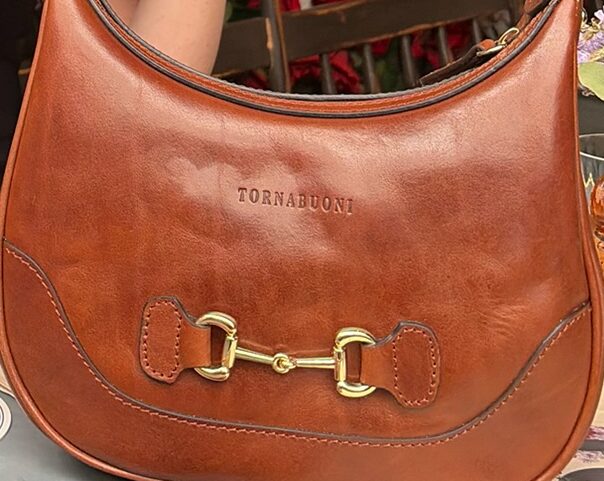
At Tornabuoni Tuscany, “Made in Italy” is not used as a marketing phrase. It is the foundation of everything we do.
Our pieces are designed and handcrafted in Italy, working with materials that are selected for their quality and longevity. Each item reflects the traditions of Florence—where craftsmanship is still alive, and where attention to detail is not optional, but expected.
We believe in creating products that are not just purchased, but lived with.
Because in the end, the true value of “Made in Italy” is not found in the label itself—but in the craftsmanship, the intention, and the time behind it.